How I Work
Sometimes the brief comes later.
Not every project starts with a clear question.
Often, there is simply a feeling that something could work better.
A school that has changed over time.
A healthcare environment that no longer feels quite right.
A place with untapped potential.
My work begins with understanding a place and imagining what it could become.
01 Understanding a Place
Before proposing solutions, I spend time observing.
How people move.
Where they pause.
Which spaces are used naturally and which are avoided.
Through conversations, observation and time spent in a place, patterns begin to reveal themselves.
Often, the real challenge is not the one people initially think it is.
At Canadian Academy in Kobe, the conversation began with strengthening identity and connection within the school. Through observation, interviews and analysis, it became clear that the real opportunities lay elsewhere: an underused atrium, corridors that did not invite interaction, and a library that felt overwhelming for younger children.
The project became not about colours, but about transforming the spaces that shape everyday life.
Sometimes the most meaningful change begins with seeing a place differently.
02 Seeing Space as a Landscape
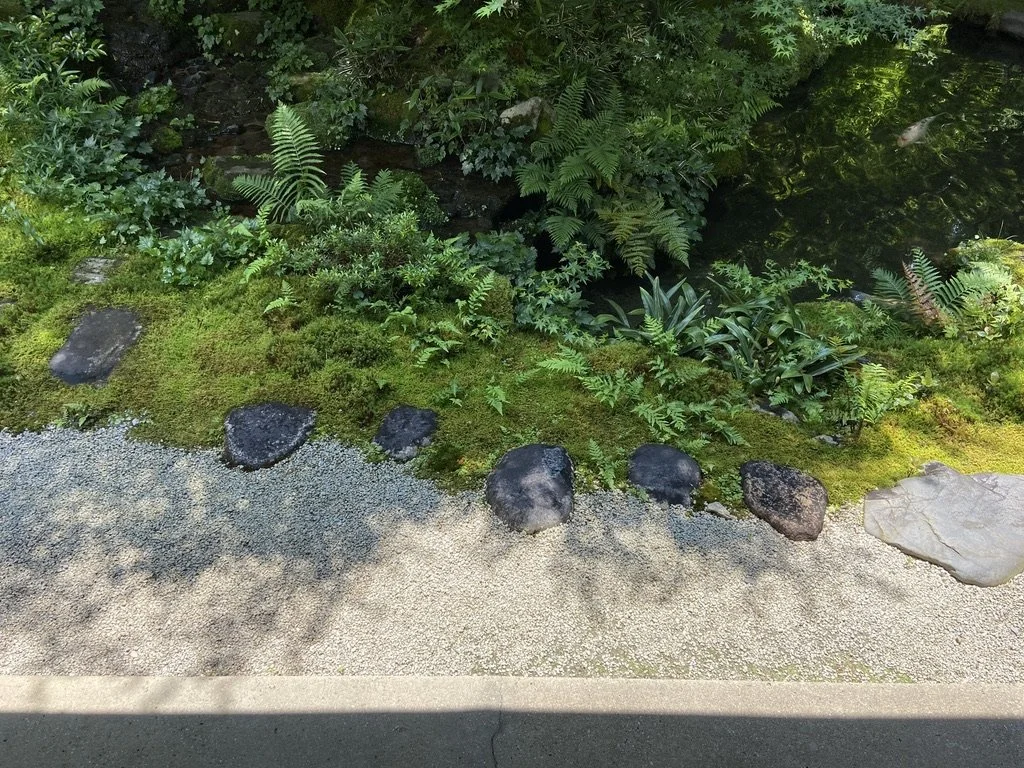
My years living and working in Japan fundamentally shaped the way I think about space.
I do not see architecture and interior design as separate disciplines. Nor do I see buildings as collections of rooms.
I see them as part of one continuous landscape.
A place is experienced through movement. Through changing qualities of light. Through materials, sounds, views and the transitions between one space and the next.
The Japanese concept of Ma (間) continues to influence my work. Not as a style, but as a way of paying attention.
To the moments between arriving and entering.
Between activity and rest.
Between inside and outside.
These moments often shape our experience of a place more than the rooms themselves.
That is why I pay as much attention to atmosphere, sensory experience and transitions as to the spaces themselves.
03 From Insight to Transformation
The insights gathered at the beginning become the starting point for what follows.
Sometimes they reveal a new way of looking at an existing place.
Sometimes they lead to a renovation, a new interior, or a larger transformation.
For the So Fit & Fun Centre at Sophia Children's Hospital, the process began with conversations.
Together with healthcare professionals, children and families, we explored what the space could become.
The children spoke about a place connected to nature. A place that felt playful, optimistic and different from the rest of the hospital.
A place where they could simply be children for a while.
Those early conversations shaped the design that followed.
Whether I stay involved through to a completed building or hand over a clear foundation for others to build on, the goals remains the same: places that support learning, healing and connection.
What I leave behind is always something a team can hold on to, a shared understanding of what your place should feel like and why, put into words everyone can use.
04 Thinking Through Making
For me, designing begins with making.
I often start with sketches, physical models and materials rather than a computer screen.
A model can reveal something a drawing cannot.
A material can suggest a direction.
An idea often becomes clearer once it can be touched, tested and experienced.
Long before a project takes shape as a building or interior, it often exists as a sketch, a paper model, or a conversation around a table.
This process of making and testing allows ideas to develop gradually through observation, curiosity and discovery.
It is also the approach I bring to my teaching: understanding space not only through thinking, but through making.
Every project is different.
Sometimes I am involved from the very beginning. Sometimes I join an existing team. Sometimes my role is strategic, sometimes it is focused on design.
Where Can I help
Spatial Discovery
Understanding how a place is used, experienced and where its untapped potential lies.
Imagining Possibilities
Developing ideas, concepts and future directions that shape what a place could become.
Architecture + Interior Design
Designing environments that support learning, healing, connection and everyday life.
Colour, Material & Atmosphere
Exploring how colour, materials and light influence the way a place is experienced.
Lectures + Workshops
Helping organisations, teams and students explore the relationship between space, nature and the senses.